
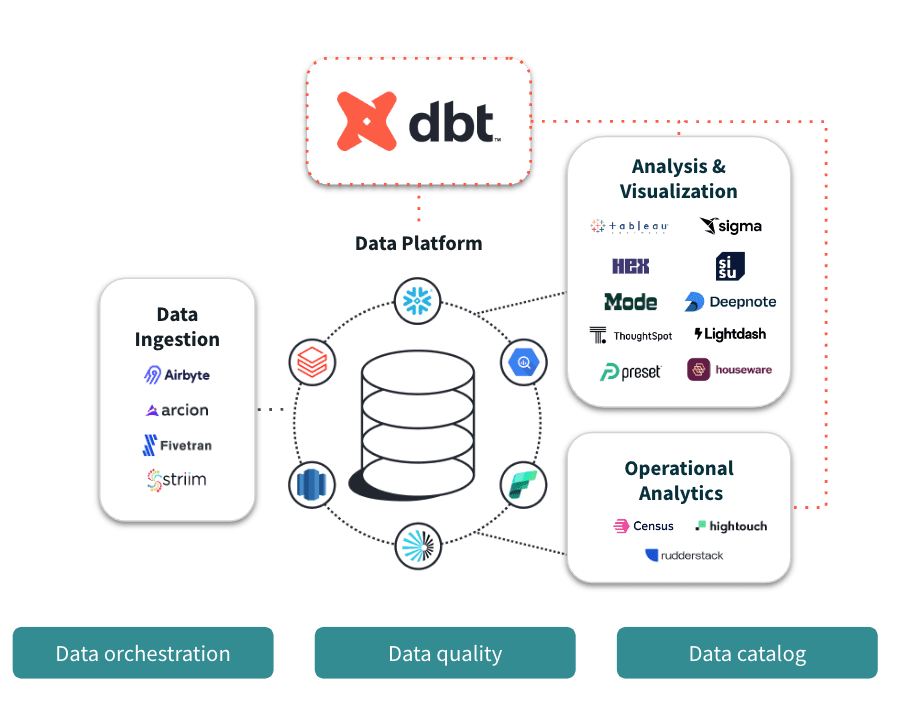
Better Data Engineering Part 1: Why dbt Matters
A practical introduction to dbt and why it changes the way we build data pipelines.
Why?
Why dbt?
Why another tool in the Modern Data Stack?
Why should a Data Engineer care?
Introduction
If you've been building pipelines long enough, you've probably dealt with:
- SQL scripts scattered across repos
- undocumented transformations
- inconsistent naming
- fragile pipelines that break silently
- analysts rewriting the same logic in dashboards
dbt solves these problems by bringing software engineering principles to SQL.
This blog series will walk you through the fundamentals of dbt and how to use it effectively as a Data Engineer.
Rule 1: Treat SQL Like Code
dbt forces you to think in terms of:
- modularity
- version control
- testing
- documentation
- CI/CD
SQL stops being “queries in a warehouse” and becomes a real codebase.
Rule 2: Transformations Belong in the Warehouse
Stop moving data around unnecessarily.
dbt embraces the idea:
“ELT over ETL — transform where the data lives.”
This reduces complexity and improves performance.
Rule 3: Build Trust with Tests
A pipeline without tests is a pipeline waiting to fail.
dbt makes testing:
- simple
- declarative
- automated
Start with:
uniquenot_nullrelationshipsaccepted_values
Rule 4: Document as You Build
Documentation is not an afterthought.
dbt generates docs automatically from your models, tests, and descriptions.
Your warehouse becomes self-explanatory.
Stay tuned for Part 2!